





From Win To Wallet: The Cash-Out Flow
Picture this: you finish a session, your balance looks great, and you want funds moving now. Most delays start right here, when people treat the cashier like a single click instead of a short process. The better mindset is simple: set things up once, then repeat the same clean routine every time.
Start in the cashier area and pick a payout route that matches how you funded earlier, if that’s available. Many systems prefer consistency, so using a familiar method reduces extra questions. If you decide to switch methods, it can still work - just expect a bit more verification, especially if it’s your first cash-out.
What You Actually Do In The Cashier
If you’ve never requested a payout before, the screen can feel deceptively easy: method, amount, confirm. Imagine you’re on mobile, rushing between errands - that’s when mistakes happen. Slow down for thirty seconds and check three things: the method you selected, the account identifier (card, wallet, or bank details), and whether any part of your balance is restricted by an active promotion.
After you submit, keep your device available. Some confirmations can arrive as prompts, and missing them may stall the request. One practical habit: note the reference number or status line in your transaction history, so you can track it without guessing later.
What Typically Happens After You Press Confirm
Behind the scenes, there are usually a few gates: account checks, promotion checks (if you joined an offer), and payment routing. A common scenario is this: you claimed a bonus, played through most of it, and now the system needs to confirm the terms were met before funds are approved. That review might be automated, manual, or a mix depending on account history.
When everything matches - name, method, and activity - approval tends to move faster. When something looks inconsistent, the request may pause for clarification. Treat a pause as a signal to supply missing info, not as a dead end.
What Shapes Payout Speed In 2026
Two players can request funds on the same day and see different timelines. Usually it’s not “luck” - it’s inputs. Think about airport security: the line moves fast until a bag needs a closer look. If you understand common triggers, you can avoid most slowdowns.
The other factor is eligibility. The platform is intended for adult players, and access depends on your location and the rules that apply to you. If you’re in Australia, approach play responsibly, confirm you meet the minimum legal age in your area, and be ready for standard identity checks before your first payout.
Verification Timing And Document Quality
Imagine you sign up, play for a week, then upload documents only when you want your money out. That’s the classic bottleneck. Many services run verification at the first cash-out request, so you can save time by completing checks earlier, when you’re not in a hurry.
Quality matters more than people expect. Clear photos, visible corners, matching names, and readable dates reduce follow-up messages. If your address proof is blurry or shows a different spelling, expect a request to resubmit - and that adds time.
Method Choice, Banking Cutoffs, And Local Processing
A player might choose an e-wallet for speed, while another prefers a bank transfer for comfort. The trade-off is that banks often have cutoffs and business-hour rhythms. Picture submitting late on a Friday night - the platform may approve quickly, but your provider may not process it until the next working window.
In Australia, different banks and card networks can show different “pending” behavior. The key detail is this: once approved on the platform side, the final timing often sits with the payment network, not the game lobby.
Why Some Requests Get Paused
Pauses usually come from patterns designed to protect accounts. For example, changing email, phone number, or payment details right before a payout can trigger extra review. Another common stop is a name mismatch between your profile and the destination account.
Sometimes it’s simpler: the requested amount exceeds a method limit, or part of your balance is locked by a promotion. In those cases, splitting the request or finishing the promotion conditions can solve the problem faster than repeated resubmits.
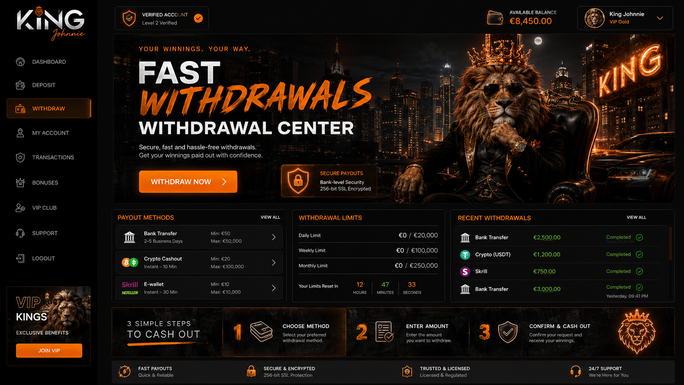
Payment Options And Practical Expectations
Most players choose a method based on what they use day-to-day, then learn later that each route has its own rhythm. Imagine you want quick access for a small win, but also want a reliable channel for larger cash-outs - that’s two different needs, and usually two different habits.
Before you request funds, confirm the account is in your name, supports incoming transfers in your region, and can be used consistently going forward. If you’re unsure, do a small test cash-out first. That single test often teaches you more than any checklist.
Here’s a practical snapshot of how players usually compare methods (expectations vary by provider and your own verification status):
Payout Method Type | Best Fit Scenario | Typical Processing Rhythm | What To Double-Check |
|---|---|---|---|
Bank Transfer | Larger amounts, fewer reversals | Often 1-5 business days after approval | Name match, bank details, cutoff times |
Card Refund-Style Payout | Returning funds to the same card | Network-dependent, sometimes several days | Same card used before, card still active |
E-Wallet | Faster access for smaller amounts | Often same day to 48 hours after approval | Wallet verified, correct wallet ID |
Instant Bank Option | When available for quick access | Can be near-instant after approval | Supported bank, daily limits, live status |
Alternative Method | Limited use cases | Varies widely by provider | Whether cash-out is supported |
How To Match A Method To Your Goal
If you’re cashing out after a long session, you usually want certainty more than speed. Pick the method you trust, submit a clean request, and let it run without constant changes. If you’re testing the platform, do the opposite: make a small request first, see how status updates appear, and learn what support asks for when something needs clarification.
A strong routine is to keep one primary method for most payouts and a backup for edge cases, without switching details right before a request. Stability is often the hidden “fast” setting.
Limits, Fees, And Self-Control Settings
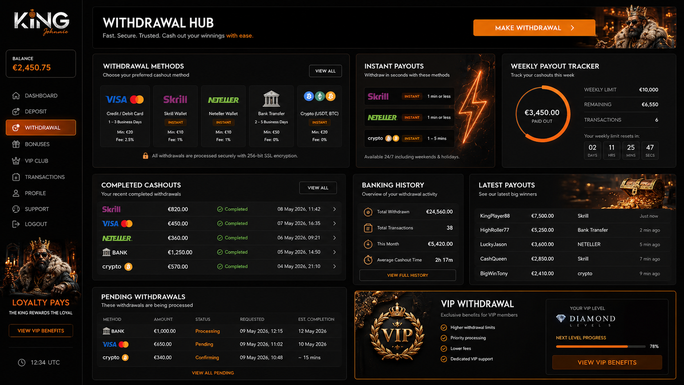
It’s normal to look for one neat “minimum” or “maximum,” but limits usually depend on the method, your account checks, and sometimes your own settings. Picture this: you request a large amount in one go, it doesn’t go through, and you assume the platform is blocking you. Often the fix is simpler - split the amount, choose a better-suited rail, or complete verification first.
Fees can also be situational. Some processors may add charges, while banks can apply incoming transfer fees on their side. Instead of hunting for a perfect universal answer, do two checks every time: read the cashier notes before confirming, and review your bank or wallet statement after the payout lands.
Now the part players skip until it matters: control tools. Many platforms in 2026 offer deposit limits, loss limits, session reminders, timeouts, and full self-exclusion options. Imagine you’re playing late, emotions high, and you keep topping up “just once more.” A timeout or session reminder can break that spiral before it becomes expensive.
If you set limits, treat them like seatbelts - not a punishment, just a safeguard. When you feel you’re playing to chase losses rather than for entertainment, use a break tool first, then decide what to do next with a clear head.
Mobile Cash-Outs Without Stress
Phones make everything feel instant, but they also make it easier to miss a detail. The common scenario: you’re on mobile data, the page reloads, and you’re not sure whether the request went through. A simple habit helps - after submitting, open your cashier history and look for a status line that confirms it’s in the queue.
If you prefer mobile play, keep your device updated and avoid switching networks mid-transaction. Those two choices alone prevent a surprising number of “I clicked confirm and nothing happened” moments.
Fast Checks On iOS And Android
Imagine you’re logged in, but the cashier button doesn’t respond. First, refresh once, then fully close and reopen the app or browser. If it persists, clear cache for the browser version (or log out and back in), and use reinstall only as a last step.
If you use biometric login, confirm your session is still active before submitting a payout request. An expired session can kick you out right at confirmation, which looks like a failed request even when it simply needs a quick re-login.
Fixing Common Payment And Account Errors
If your method keeps failing, troubleshoot like you would a card terminal: isolate the variable. Try a smaller amount, re-check the destination details, and confirm whether the platform expects the payout route to match your last deposit method. If you recently changed personal details, wait until those changes are fully confirmed before requesting funds.
Another scenario: you see “pending” for a long time and start refreshing repeatedly. That can create duplicate requests or confuse your tracking. Instead, note the status, wait a sensible interval, then contact support with a clean summary of what you see.
Support, Disputes, And Getting Clear Updates
Support feels “fast” or “slow” based on what you send. Picture two players: one writes “where is my money??” and another writes a tight message with date, method type, amount, and the current status shown in the cashier. The second usually gets a clearer answer because the agent can act without asking five follow-ups.
Use support as a tool, not a vent. Ask for the current stage (submitted, under review, approved, sent) and what action they need from you. If they say it has been sent, your bank or wallet provider may be the next place to check.
What To Send So The Agent Can Solve It
Before you open chat, prepare four items: the transaction reference (or history entry), the method type, the amount, and the time you submitted. Imagine you’re telling the story to someone who can’t see your screen - a short timeline beats a long rant every time.
If you used a promotion, mention whether it’s completed and whether any funds are still restricted. If you can include one clear screenshot of the cashier history showing the status line, do it. One clean image and a tidy message often save an entire day of back-and-forth.
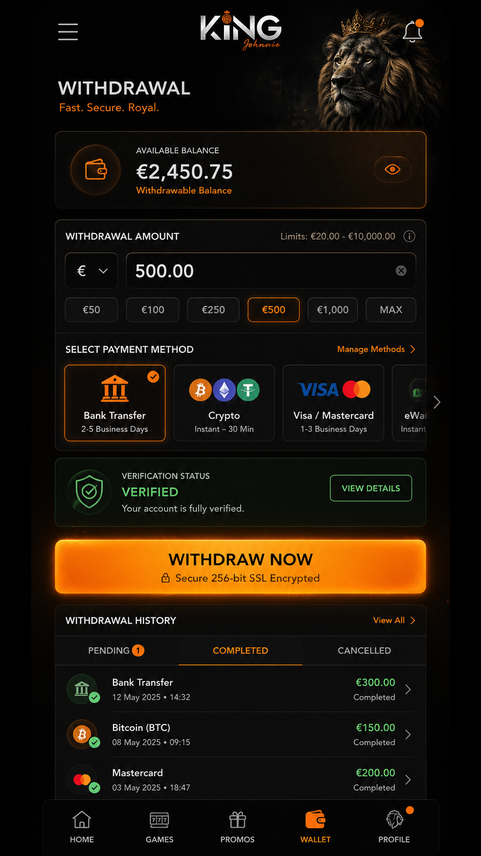
Keeping Your King Johnnie Withdrawal Smooth In 2026
The best way to avoid payout drama is to build a “clean account” habit. Imagine you treat your profile like a bank profile: same name everywhere, stable payment methods, and no last-minute edits. That approach reduces the triggers that push requests into manual review.
Set up verification early, even before your first cash-out. Then, when you request funds, stick to a method you’ve already used and keep the amount realistic for that route. If you need a larger payout, split it into a couple of requests and track each status separately, instead of cancelling and resubmitting.
Protect your side as well. Use strong passwords, enable extra login security where available, and never share accounts or devices. If something looks off, pause play, contact support, and consider a timeout or self-exclusion tool until you feel in control again.